
By Teniope Adewumi-Gunn and Juanita Constible - Natural Resources Defense Council, August 2022
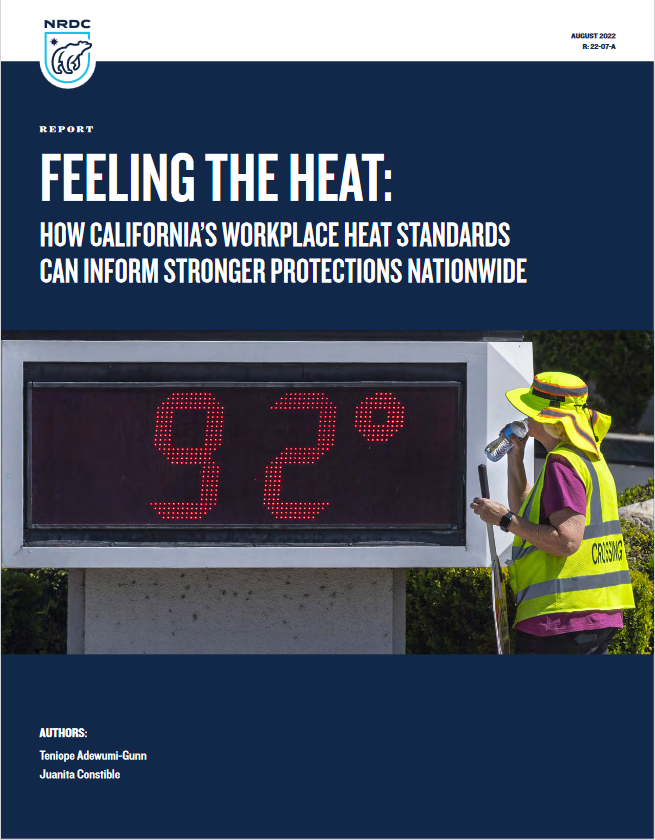 We are in the midst of a profound public health crisis. Rising temperatures fueled by climate change are contributing to more extreme weather events, spikes in air pollution, more frequent wildfires, and increases in tick- and mosquito-borne disease outbreaks. The resulting health harms fall more heavily on some populations than others, including workers. Workers face a range of climate-related hazards on the job, but one of the most pressing and well-understood hazards is extreme heat.
Extreme heat is killing and sickening workers. Both short stretches of extreme heat and chronic exposure to heat can cause significant effects on their physical, mental, and social well-being. Heat can cause rash, cramps, exhaustion, and stroke, the most serious heat-related illness. The Bureau of Labor Statistics (BLS) Survey of Occupational Injuries and Illnesses (SOII) estimates that from 1992 to 2019, more than 900 workers died and tens of thousands more were sickened due to extreme heat.
However, these numbers greatly underestimate the scale of the problem due to lack of reporting by negligent employers and by workers afraid of retaliation (e.g., loss of employment or deportation if they are undocumented). These numbers are further deflated when heat is not identified as a cause of, or contributor to, illness or injury. Negative outcomes from cardiac or respiratory illnesses are often not attributed to heat, even if that is an underlying cause. Physical and mental effects of heat such as disorientation can also increase the risk of other work- related injuries including falling from heights, being struck by a moving vehicle, or mishandling dangerous machinery. Research has shown that the number of workers facing health outcomes from extreme heat are higher than those reported by the BLS SOII. In fact, in California alone, a study of workers found more than 15,000 occupational heat-related illness cases from 2000 to 2017. The California cases were three to six times higher annually than the numbers reported for California by BLS.
Exposure to extreme heat impacts both indoor and outdoor workers. From agricultural and construction workers, who have the highest incidences of heat-related illnesses, to warehouse and other indoor employees working without adequate cooling or ventilation, heat touches many workplaces. Workers of color also experience greater rates of heat-related illnesses and fatalities than do white workers. Workers of color are overrepresented in industries with a high risk of heat illness, but racial disparities in heat illness and death also exist among those working the same jobs. Additionally, not all workers tolerate heat the same way. Those with personal risk factors such as heart disease, medications, and pregnancy are more likely to experience heat stress.
Download a copy of this publication here (PDF).